Irenke Berger
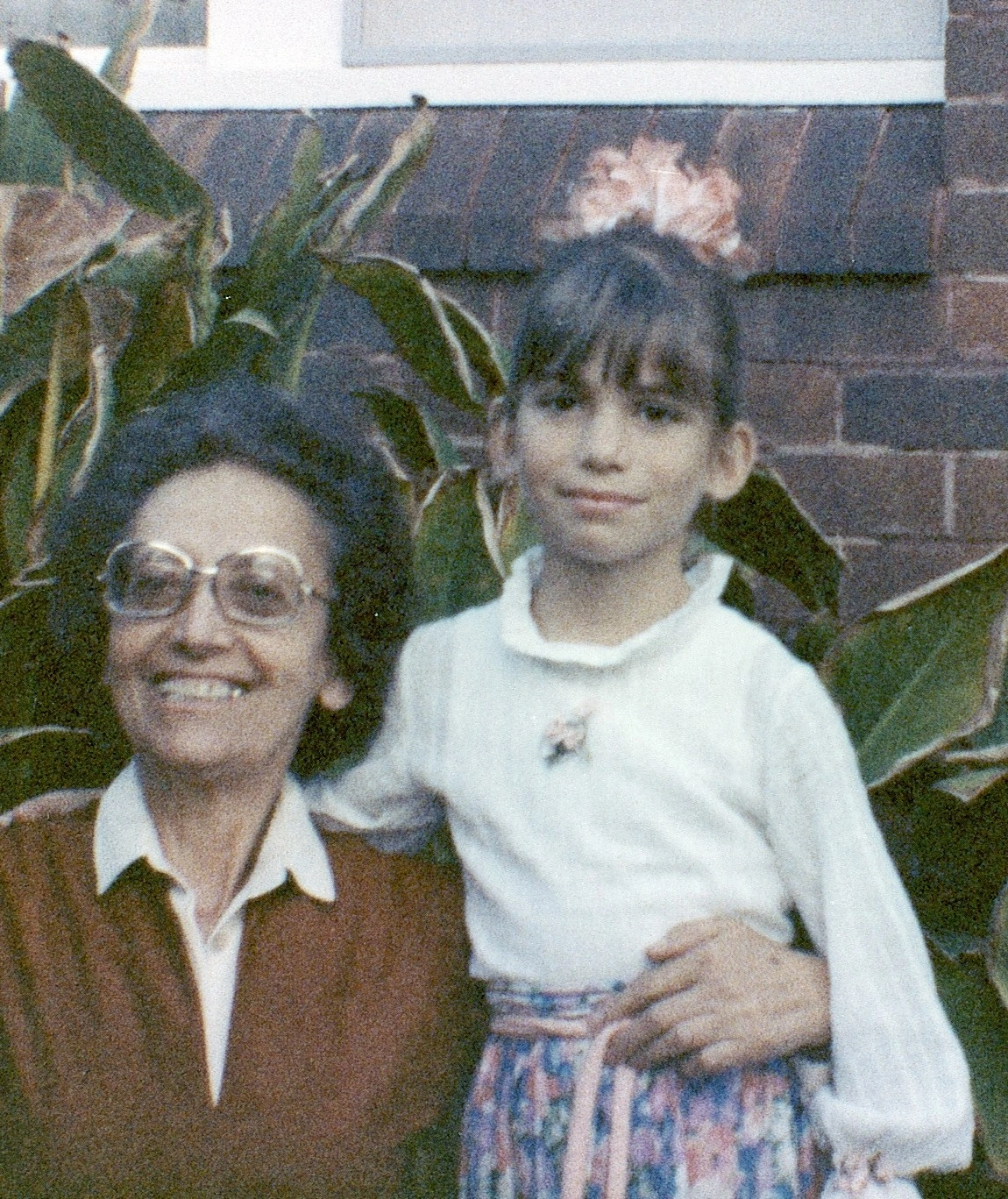
Told by her granddaughter, Joanna Auerbach
There was a joke in Joanna's family that her Great Uncle used to tell - that when he married his wife Margit, he got a second thrown in for free - because Margit and her sister Irenke were identical twins and the girls were inseparable. And so the story that Joanna tells, of her maternal grandmother Irenka Berger, is actually one of two women, so intertwined were their lives and story.
The twins grew up, alongside four older siblings, in the tiny town of Mehteklek in Hungary. By the time the Nazi’s invaded in 1944, Irenke was a young woman living and working in Budapest. She had been due to return to her mother’s home in Mehtelek to celebrate the Jewish festival of Passover with her family, but the reunion never happened. Instead, Irenke made hurried arrangements, alongside her sister, to evade incarceration in the city’s newly built ghetto. She dyed her hair, learned the Lord’s Prayer, and took on an entirely new identity - that of a Christian woman named Ilona. Hiding in this way demanded invisibility, whilst identical twins tend to attract attention, and so now Irenke lived at a distance from Margit, on the other side of town. In this precarious way, the twins survived the Holocaust.
In Australia, family remained at the heart of everything the twins did, and when Irenke died, Margit stepped seamlessly, almost, into the role of grandmother. Similar to her Great Uncle, Joanna got a second grandmother thrown in for free! Joanna’s story honours both of them, and demonstrates the resilience and fortitude that comes from deep family love and connection.